
Inji Efflatoun (1924-1989) was one of Egypt's most important 20th-century artists and political activists. Her life story—one of artistic brilliance, political courage, and personal resilience—has now been made accessible to English-speaking audiences through a collaborative translation effort.
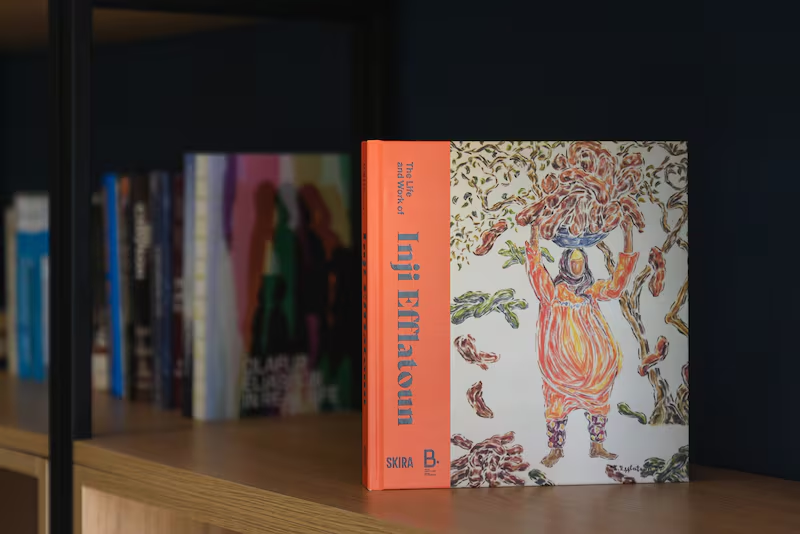
As a freelance translator for the Barjeel Art Foundation, I had the privilege of co-translating Efflatoun's memoir from Arabic to English. This memoir forms the first half of the edited volume The Life and Work of Inji Efflatoun, published by Skira Editore in 2025.
Publication Details
Editors: Sultan Sooud Al Qassemi and Suheyla Takesh
Publisher: Skira Editore, 2025
Role: Co-translator (Arabic to English)
Available: Amazon
About Inji Efflatoun
Inji Efflatoun was a woman ahead of her time. Born into an aristocratic Egyptian family, she rejected the comfortable life expected of her to become both a pioneering surrealist painter and a committed communist activist. Her art captured the struggles of working-class Egyptians, particularly women, while her activism led to imprisonment during the Nasser era.
Despite facing political persecution and imprisonment, Efflatoun continued to create art that challenged social norms and celebrated the resilience of the Egyptian people. Her paintings hang in major collections worldwide, and her memoir provides invaluable insight into Egypt's tumultuous mid-century political and cultural landscape.
The Translation Project
Translating Efflatoun's memoir was a deeply rewarding challenge. The work required not only linguistic precision but also cultural sensitivity and historical understanding. Efflatoun's voice—direct, passionate, and unflinchingly honest—needed to resonate with contemporary English-speaking readers while preserving the texture of mid-20th century Egyptian political discourse.
Featured in The National
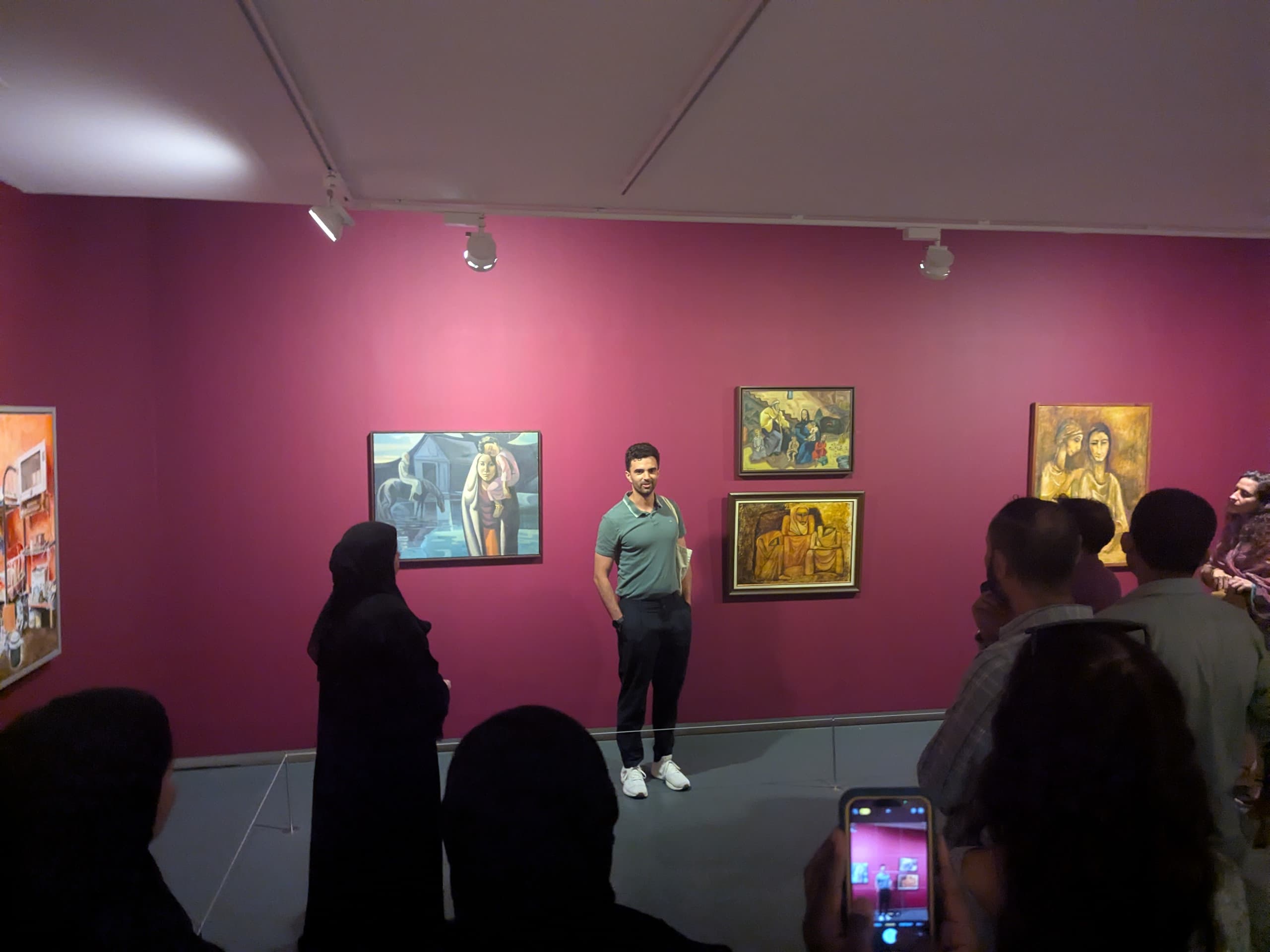
Presenting at Barjeel Art Foundation, Sharjah
BULAQ Podcast appearance
Media Coverage & Recognition
The publication has been well-received in literary and academic circles, with coverage in prominent outlets focused on Arabic literature and Middle Eastern studies.
The Translation Experience
Ahmed Gobba and I were students in Sultan Sooud Al-Qassemi's renowned course The Politics of Middle Eastern Art at Yale University in spring 2019. For his final research paper, Ahmed delved into the life and works of Inji Efflatoun, who quickly became a source of inspiration for him. Roughly one year later, during the COVID-19 lockdown, Ahmed contacted Sultan about translating The Memoir of Inji Efflatoun, which was only available in Arabic at the time. Ahmed began the work, then invited me to join after we reconnected in early 2022.
We spent considerable time from 2020 to 2022 translating the memoir. For me, the work began in Amman, Jordan, and finished in Los Angeles, California. For Ahmed, it spanned from Singapore to Egypt. We still haven't seen each other in person since 2019—perhaps this translation will bring us together in the future.
Co-translation was challenging yet rewarding. We collaborated remotely, passing chapter drafts back and forth for revision, meeting via Zoom nearly every weekend to discuss translations of colloquial Egyptian phrases and technically challenging passages. Ten-hour time differences and technical issues tested our patience, but with time, our workflow became second nature.
Each chapter was initially attempted by one translator, then thoroughly revised by the other (and finally by our editor, Nadine). We learned that two translators does not mean half the work—each revision requires significant time and attention. In terms of hours, the entire memoir was translated twice, resulting in a distillation of the best word choices at the most detailed level.
Personal Connection
Ahmed's desire to translate Efflatoun's memoir was motivated not only by admiration of her art and life, but also by a personal connection he discovered upon reading it. Like Efflatoun, Ahmed's family hails from Kafr Shukr, a small town in Al-Qalyubiya governorate. His grandfather was a fellah (farmer), and Efflatoun's family were well-known aristocrats who owned vast farmlands there. As she mentions in her memoir, Efflatoun often visited her family's rural country home, with these visits increasing after her release from prison in 1963. During that period, her paintings depicted Kafr Shukr's rural scenery, the fellaheen, and the vibrant harvest season—the same scenes Ahmed still experiences in his grandfather's orange orchard today.
Reflections
Working closely and repeatedly with this text inspired us to think locally and historiographically: How are we serving the communities in which we live? What historical changes are taking place in our neighborhoods, cities, and global community? What is our role and responsibility in creating a brighter future? We hope that readers will reflect on similar questions as they engage with the life and work of Inji Efflatoun.